
Schlotzsky's Deli
Schlotzsky'sFood & Drink
4.63.58K Reviews
- Version
- 5.11
- Installs
- 500.00K
- Age Rating
- Everyone
Screenshots

Our Review of Schlotzsky's Deli
 Analysis by Appyee
When I use Schlotzsky's Deli, I think of it less as a general food app and more as a digital shortcut for staying connected with this particular deli. Its central promise is simple: I can use it wherever I am, keep track of rewards, and make the next visit feel more organized than starting from scratch. That focus matters. If I already enjoy Schlotzsky's, the app gives me a reason to keep it on my phone; if I am looking for a broad restaurant-discovery tool, it is much narrower than that.
The app comes from Schlotzsky's and sits in the Food & Drink category. It is free, carries an Everyone content rating, and supports devices running iOS 11 or later. The current release is version 5.11, while its long-running presence since June 2, 2014, suggests that this is an established companion rather than a newly assembled ordering experiment.
Rewards Are the Capability That Matters Most
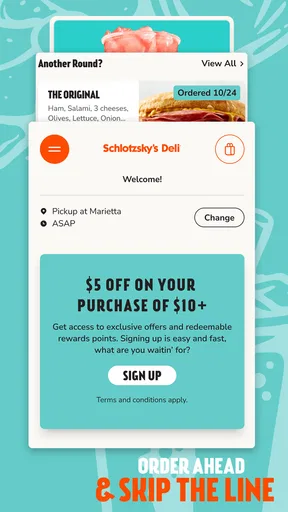
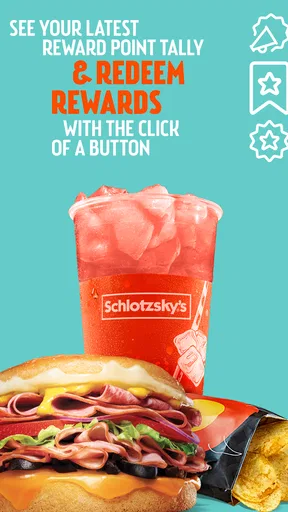
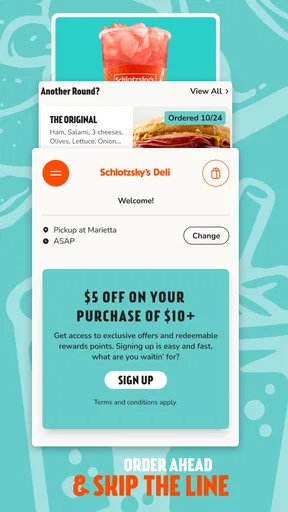
The feature I notice most is the ability to earn rewards while staying connected to the brand. That sounds modest, but it changes how I approach repeat visits. Instead of treating every sandwich, salad, or drink purchase as an isolated transaction, I have a reason to use the same digital channel again. For regular customers, that continuity is the real value of the app.
I would not describe the rewards function as a bonus decoration around a menu. It is the part that gives the application a job. A restaurant app can easily become something I install once, browse briefly, and forget. A rewards connection gives me a practical reason to return, especially when I already know I will visit the deli again. The strongest use case is repeat ordering behavior, not casual restaurant browsing.
That distinction also helps set expectations. The application is not trying to replace every food service tool on a phone. It is tied to Schlotzsky's, so its usefulness depends on whether this is a restaurant I actually choose. Someone who rarely visits the chain may find the rewards angle too limited to justify another app. Someone who stops in regularly may appreciate having the relationship in one place.
Its public reception supports that focused usefulness. The app has an average rating of 4.6 from roughly 17 thousand ratings, with about 3.6 thousand written reviews, and it has passed 500 thousand installs. Those figures do not guarantee that every screen will suit every customer, but they do suggest that many people find the basic restaurant-companion idea worthwhile.
What the rewards focus changes in everyday use
For me, the main benefit is reduced mental effort. I do not have to remember every detail of a previous visit or keep a separate note about whether I am close to a reward. The app gives the loyalty relationship a visible home. That is especially useful when I am deciding between Schlotzsky's and another familiar lunch option: the accumulated value can influence a choice that would otherwise be based only on convenience.
There is also a subtle planning advantage. If I know I am likely to eat at the deli during a busy week, opening the app before I leave lets me make the visit part of a repeat routine rather than an impulse purchase. I can think about the meal and the reward progress together. This is not a dramatic feature, but it is the sort of small nudge that makes a loyalty program feel useful instead of theoretical.
I would still keep expectations realistic. Rewards do not automatically make a meal cheaper in every situation, and the app cannot turn an inconvenient location into a convenient one. Its value is cumulative. The more naturally Schlotzsky's already fits into my routine, the more meaningful the digital connection becomes.
How I Would Use It in Practice
My preferred workflow starts before I leave home. I open the app, check the available restaurant experience, and make sure I am using the account or reward connection I intend to use. I then decide whether the visit is worth handling through the app or whether walking in and ordering directly will be faster. That last decision is important: a restaurant app should save effort, not create a second task.
For a normal weekday lunch, I would use it as a quick checkpoint. I am already considering Schlotzsky's, so I open the app, review what is relevant to my visit, and continue only if the digital route is clearer than ordering at the counter. Afterward, I would check that the visit has been associated with my rewards activity. This habit helps avoid the common frustration of assuming a loyalty action happened without verifying the account state.
A useful tip is to treat the app as part of the whole visit rather than opening it only at the final moment. Restaurant connectivity is more helpful when I have time to make a calm choice. If I wait until I am standing in a crowded pickup area with a low battery and a hungry group, any extra screen or sign-in step feels more annoying. Preparing earlier makes the rewards capability feel like a convenience instead of a delay.
Another practical tip is to use one consistent account identity. Loyalty tools are most useful when purchases and rewards remain connected to the same profile. Switching between accounts, devices, or informal ordering habits can make the experience harder to follow. I cannot expect a reward history to be clear if I use the app inconsistently and then try to reconstruct everything afterward.
A realistic lunch scenario
Imagine I am leaving work with two coworkers. We have a short lunch break, and everyone wants something familiar rather than spending time comparing restaurants. I open Schlotzsky's Deli while we are still deciding, use the app to keep the visit connected to my rewards activity, and let the others choose without turning the process into a long planning session.
In that situation, the app is valuable because it supports a decision I have mostly already made. It does not need to persuade me that Schlotzsky's exists; it needs to make a repeat visit easier to manage. I would avoid passing the phone around the table or forcing everyone to interact with the application. The best approach is for the person who already uses the loyalty program to handle the digital part while the group focuses on the meal.
That scenario also exposes the app's limits. If my coworkers want several different restaurants, or if we are searching for a new cuisine, this is the wrong tool. A general delivery or restaurant-discovery service would be better for comparing many options. Schlotzsky's Deli works best after the restaurant choice is already fairly settled.
Where it fits beside usual alternatives
Compared with ordering directly at the counter, the app can offer a more continuous relationship with the brand through rewards. The counter is still simpler for a one-off customer who does not want an account or does not expect to return. Direct ordering also avoids the need to learn a separate interface. I see the app as an advantage for repeat behavior, not an automatic replacement for the traditional visit.
Compared with a broad delivery platform, Schlotzsky's Deli is more focused. A delivery marketplace may be better when I want to compare restaurants, delivery fees, cuisines, or estimated arrival options. This app is better when I specifically want the Schlotzsky's connection and care about keeping my activity tied to its rewards system. The trade-off is breadth for loyalty relevance.
Compared with a mobile browser, a dedicated app can be more convenient when I visit often because the restaurant relationship is already separated from unrelated tabs and searches. However, a browser may be preferable for someone who visits only occasionally and dislikes adding another application. The choice comes down to frequency: regular customers gain more from a persistent shortcut than occasional visitors do.
Tradeoffs I Would Consider Before Installing
The first limitation is obvious but important: this is a single-brand application. Its usefulness rises and falls with my interest in Schlotzsky's. I would skip it if I am trying to reduce the number of apps on my phone, rarely eat there, or mainly want a tool that searches across restaurants.
The second trade-off is attention. Rewards programs encourage repeat engagement, which can be helpful, but they can also make me think about loyalty value when a simpler choice would do. I try not to let a reward determine a meal I do not actually want. The app is most sensible when it supports an existing preference rather than pushing me into an unnecessary purchase.
There is also a practical risk in relying on any digital workflow during a rushed meal. If the app takes longer to open than expected, if I have forgotten account details, or if the restaurant visit needs to move quickly, the counter may be the better option. I would keep the ability to order normally rather than assuming the phone must handle every part of the experience.
Another trade-off is that the app's value depends on remembering to use it at the right time. A rewards connection cannot help much if I repeatedly order outside the app and only open it later. I would build it into my routine before arriving, not after the meal when the useful moment may have passed. This is one of those applications where a small habit matters more than technical sophistication.
Device compatibility is worth checking as well. Since the stated minimum operating system is iOS 11, users on older Apple devices should confirm that their phone can run it before planning around the app. For supported users, the Everyone rating makes it broadly suitable from an age-classification perspective, although parents may still prefer to supervise any account or purchase activity on a shared device.
What I would do when the digital route is inconvenient
If I am in a hurry, I would order directly and treat the app as optional rather than allowing it to slow the visit. If I am visiting with a large group, I would decide in advance who is responsible for the rewards connection. If I am trying Schlotzsky's for the first time, I would focus on whether I like the restaurant before making loyalty behavior part of my routine.
That flexibility is important because the app should reduce friction, not create loyalty to the app itself. I appreciate tools that know when they are secondary. In my view, the best experience comes from using the application when it adds continuity and skipping it when a straightforward in-person interaction is clearly easier.
Who Gets the Most From Schlotzsky's Deli
The clearest audience is a regular Schlotzsky's customer who wants rewards to follow their visits in a convenient digital form. It also suits people who prefer planning lunch before leaving work, who often return to the same restaurant, or who like having a brand-specific account rather than relying entirely on a general food platform.
Families may find it useful when one person handles the restaurant account for recurring visits. Office workers can benefit from making the app part of a predictable lunch routine, particularly when Schlotzsky's is already an easy choice near their usual route. The free price removes the financial barrier to trying it, so the real question is whether the restaurant appears often enough in a person's life to make the rewards connection worthwhile.
I would be more cautious about recommending it to someone who wants restaurant variety. If the main goal is discovering independent places, comparing delivery options, or managing several chains from one screen, a broader service will likely fit better. I would also skip it if I am committed to ordering in person and do not care about digital rewards. Installing an app simply because a restaurant offers one is not a benefit by itself.
For iPhone users who meet the operating-system requirement, the application is an easy low-risk trial because it is free and aimed at everyone. I would install it before a planned repeat visit, not necessarily before a one-time stop. That timing gives me a fair test of whether the app actually improves my routine instead of judging it during an unusually rushed meal.
After using it, my conclusion is favorable but deliberately narrow. Schlotzsky's Deli succeeds when I treat it as a rewards-centered companion for a restaurant I already enjoy. Its biggest strength is continuity: it gives repeat customers a reason to keep their visits connected rather than handling every meal as a separate transaction. Its weakness is the same focus, because that value does not travel beyond the Schlotzsky's relationship.
I recommend it to regular guests who want a simple way to stay connected and earn rewards, but not to people searching for an all-purpose food app. Used before a planned visit and kept secondary to the meal itself, it can make repeat dining feel more organized. Used rarely, or installed in the hope of discovering every kind of restaurant, it is unlikely to earn a permanent place on the phone.
Verdict
Strengths of Schlotzsky's Deli
- Easy ordering for pickup or delivery through the mobile app.
- Rewards program lets frequent customers earn discounts and free items.
- Menu includes sandwiches, pizzas, salads, soups, and breakfast options.
- Store locator helps find nearby Schlotzsky’s restaurants quickly.
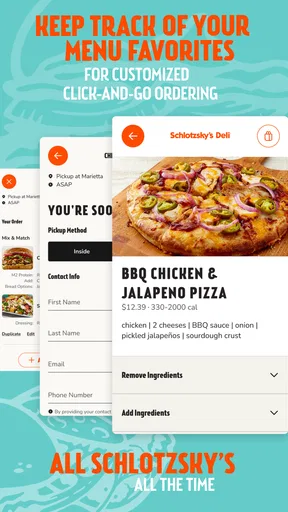
- Order customization makes it easier to adjust ingredients and preferences.
Limitations of Schlotzsky's Deli
- Delivery availability and fees vary significantly by location.
- Some menu items may be unavailable during busy periods.
- Prices can feel high compared with similar fast-casual restaurants.
- The app may require location access to show nearby restaurants.
- Promotional offers often include restrictions or limited redemption periods.
Similar Picks in This Category
View All
Rappi: Food Delivery, Grocery
Rappi, Inc - Delivery3.5

McDonald’s: Cupons e Delivery
Arcos Dorados4.3

Swiggy: Food Instamart Dineout
Swiggy4.7

Blinkit: Groceries & more
Blinkit4.8

foodpanda: food & groceries
Foodpanda GmbH a subsidiary of Delivery Hero SE4.0

Zomato: Food Delivery & Dining
Zomato4.7
Frequently Asked Questions
What is the Schlotzsky’s Deli app used for?
The Schlotzsky’s Deli app is designed to make ordering from the restaurant more convenient. After installing it, users can browse the menu, customize sandwiches and other items, place pickup orders, and in some locations request delivery. It may also provide access to restaurant information, current promotions, and account features that help save favorite orders for faster checkout.
Can I customize my food and choose specific ingredients in the app?
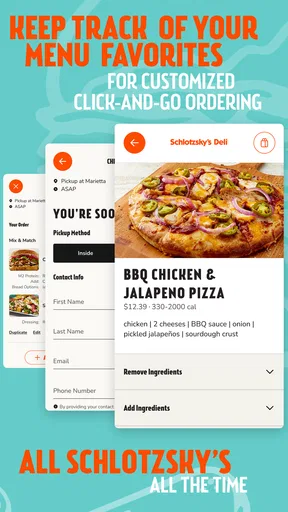
Yes, the app generally allows customers to personalize eligible menu items before adding them to the cart. Depending on the restaurant location and product, you may be able to add or remove ingredients, select options, and include special instructions. Available choices can vary by store, so the customization options shown in the app are the best indication of what that location can prepare.
Does the Schlotzsky’s Deli app offer rewards, coupons, or special deals?
Schlotzsky’s frequently promotes loyalty benefits, digital offers, and limited-time deals through its app or connected rewards program. You may need to create an account and sign in before points, coupons, or member-only promotions appear. Offers can have expiration dates, minimum purchase requirements, or location restrictions, so check the terms displayed before placing your order.
Can I use the app for delivery and pickup at every Schlotzsky’s location?
Ordering services depend on the individual Schlotzsky’s restaurant. Many participating locations support online ordering for pickup, while delivery availability may depend on your address, local staffing, operating hours, and third-party delivery coverage. Before completing an order, enter your location and confirm the available service, estimated preparation time, fees, and pickup instructions shown for that specific store.
Is the Schlotzsky’s Deli app free to download, and what should I know before installing it?
The app is generally free to download, although normal mobile data charges may apply and food, delivery, service, or processing fees are separate from the download itself. You may be asked to provide location access, an email address, or payment information to use certain features. Review permissions, privacy details, and the supported device requirements before installation.
